Akron sits at roughly 1,000 feet elevation on the Allegheny Plateau, where winter temperatures routinely swing 60 degrees in a single week. This thermal cycling, combined with an average annual snowfall of 47 inches, puts relentless stress on asphalt pavements. Flexible pavement design here must account for frost heave potential in silty glacial soils and the drainage challenges that come with spring thaw. Our work in Summit County covers everything from residential driveways to commercial parking lots and arterial road rehabilitations. We build each pavement section from the subgrade up, using laboratory-measured resilient modulus values rather than textbook defaults. The result is a structural number tailored to actual subgrade conditions beneath the site, not a generic assumption about Ohio soils. For projects where subgrade variability is a concern, we often recommend pairing the design with CBR road testing to verify in-situ strength before finalizing layer thicknesses.
A pavement section is only as reliable as the subgrade it rests on—in Akron's glacial terrain, that means verifying stiffness at the formation level, not assuming it.
Our approach and scope
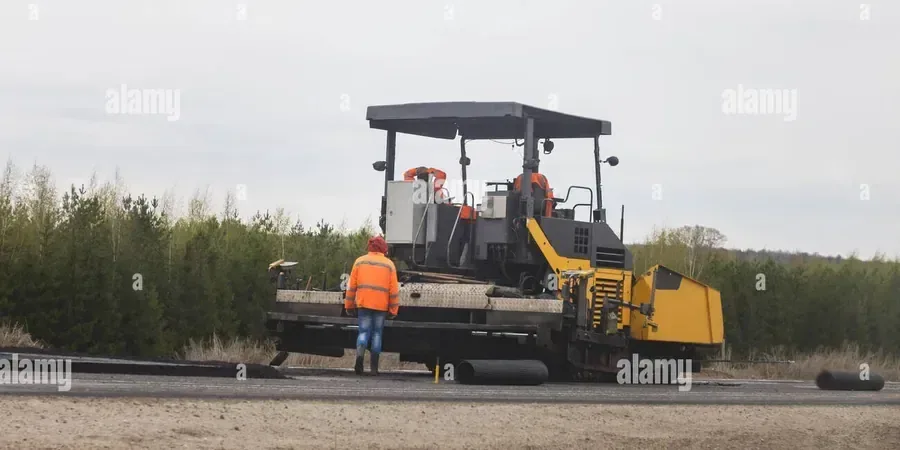
Local geotechnical context
The most common failure pattern we observe in older Akron pavements is alligator cracking that traces back to saturated subgrade during spring thaw. Many lots and secondary roads were originally built without edge drains or permeable base layers, so water gets trapped beneath the asphalt and weakens the formation through repeated freeze-thaw cycles. Another local issue is differential settlement where cut-fill transitions cross old glacial landforms—a pavement designed uniformly across the entire alignment will inevitably crack at those boundaries. We address this by mapping the subsurface profile first and adjusting layer thicknesses or adding geogrid reinforcement at transition zones. Skipping this step saves money during construction but guarantees maintenance costs within the first five winters.
Video overview
Regulatory framework
ASTM D2487 (Unified Soil Classification System), AASHTO 1993 Guide for Design of Pavement Structures, AASHTO T-307 (Resilient Modulus), ASTM D1557 (Modified Proctor), ODOT Pavement Design Manual
Related services
Pavement Structural Design
Full AASHTO 93 and MEPDG analysis using site-specific traffic forecasts and laboratory-measured subgrade resilient modulus. Deliverables include structural number calculation, layer coefficient selection, and construction specifications aligned with ODOT standards.
Subgrade Evaluation and Testing
Field sampling via test pits or SPT borings, laboratory classification to ASTM D2487, modified Proctor compaction testing, and resilient modulus determination. We map subgrade variability across the site so the pavement section can be zoned if necessary.
Typical parameters
Questions and answers
How much does flexible pavement design cost for a typical commercial parking lot in Akron?
For a standard commercial parking lot project in the Akron area, the engineering design package including subsurface investigation, laboratory testing, and the pavement design memorandum typically falls between US$1,760 and US$4,560. The final cost depends on the number of borings or test pits required and the extent of laboratory resilient modulus testing.
What makes Akron's soils different for pavement design compared to other Ohio cities?
Akron lies on the Allegheny Plateau with glacial deposits that vary sharply over short distances—stiff Kent Till in some areas, loose outwash sands in others. This variability means a single design section cannot be applied blindly across a site. Additionally, the city's higher elevation and snowfall totals intensify freeze-thaw cycling, demanding careful drainage design beneath the pavement.
Do you use ODOT specifications for private-sector flexible pavement design?
Yes, we align all material specifications with ODOT standards—typically ODOT 304 or 411 for aggregate base and ODOT 441 for asphalt concrete—because local contractors are calibrated to these specs. For private work we can adjust the design life and reliability factors while keeping the material language consistent with what local plants produce.
How do you account for freeze-thaw damage in the pavement section?
We classify the subgrade's frost susceptibility using the ASTM D2487 soil group and, for silt-rich formations common in parts of Akron, specify a granular subbase layer thick enough to act as a capillary break and drainage path. The design also includes a PG binder grade selected for Akron's low-temperature extremes, typically PG 64-22 or PG 58-28 depending on traffic speed and loading.