Slopes are a critical aspect of geotechnical engineering in Akron, USA, where the region's hilly topography and urban development demand careful management of natural and engineered inclines. This category encompasses the analysis, design, and stabilization of slopes to prevent landslides, erosion, and structural failures. In Akron, with its mix of residential hillsides, transportation corridors, and industrial sites, slope stability directly impacts public safety and infrastructure longevity. Professional evaluation ensures that both new construction and existing slopes remain secure under local climatic and geological conditions.
The local geology in Akron is dominated by glacial till, shale, and sandstone formations from the Pennsylvanian period, often interbedded with clay layers. These materials can exhibit variable strength and high plasticity when saturated, leading to potential instability during heavy rainfall or seasonal freeze-thaw cycles. The presence of steep valleys carved by the Cuyahoga River further complicates slope behavior, requiring site-specific slope stability analysis to assess failure mechanisms such as rotational slides or surficial sloughing. Understanding these geological nuances is essential for effective design and remediation.
In the United States, slope design and maintenance in Akron must comply with the International Building Code (IBC) and local amendments from the City of Akron and Summit County. These regulations often reference the American Society for Testing and Materials (ASTM) standards for soil testing and the American Association of State Highway and Transportation Officials (AASHTO) guidelines for transportation slopes. Additionally, the Ohio Department of Natural Resources (ODNR) provides recommendations for landslide-prone areas, emphasizing the need for thorough geotechnical investigations and monitoring of critical slopes.
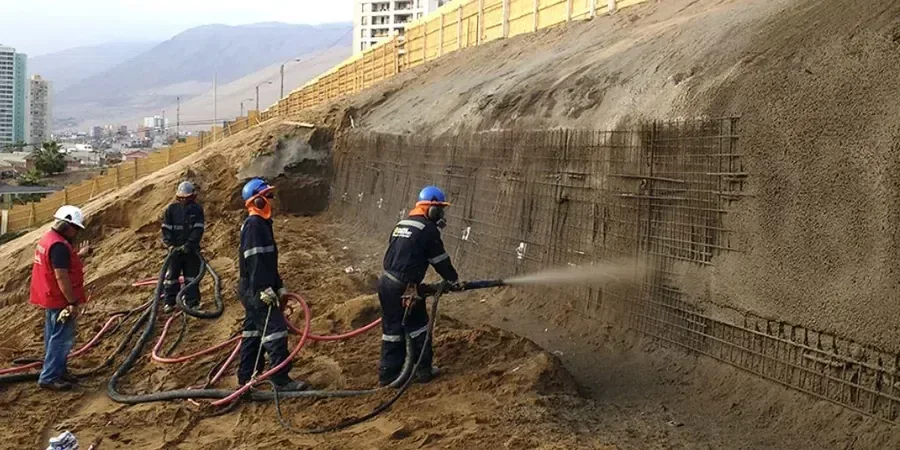
Projects requiring slope expertise in Akron range from residential developments on hillsides to large-scale commercial excavations and roadway widenings. For instance, the construction of new subdivisions or retaining walls along Interstate 77 often involves active/passive anchor design to reinforce unstable cuts. Similarly, retaining wall design is frequently integrated into projects near the Akron-Canton Airport or along the Ohio & Erie Canal Towpath Trail to manage grade changes and protect adjacent properties. Each project demands a tailored approach to ensure long-term stability and regulatory compliance.
Questions and answers
What are the main causes of slope instability in Akron?
Slope instability in Akron is primarily caused by heavy rainfall saturating clay-rich glacial till and shale, freeze-thaw cycles reducing soil cohesion, and undercutting from excavation or erosion. The local steep topography and improper drainage also contribute, making regular geotechnical assessments essential for prevention.
How does the local geology in Akron affect slope design?
Akron's geology, with layers of glacial till, shale, and sandstone, creates variable shear strengths and potential for sliding along weak planes. Clay seams can swell when wet, reducing stability. Design must account for these conditions through detailed soil testing and tailored stabilization methods.
What regulations govern slope projects in Akron, USA?
Slope projects in Akron must follow the International Building Code (IBC), local city amendments, and Summit County ordinances. The Ohio Department of Natural Resources provides guidance for landslide-prone areas, and compliance with ASTM testing standards is mandatory for soil characterization and design verification.
When should a property owner in Akron consider a slope evaluation?
Property owners should consider a slope evaluation if they notice cracks in pavement or foundations, soil movement, leaning trees, or after heavy storms. New construction on hillsides or adjacent to steep slopes also requires assessment to prevent future failures and ensure compliance with local codes.