Akron's geology changes fast. Over in Merriman Valley, the Cuyahoga River has carved through layers of glacial till and shale, and you can hit bedrock within three feet of the surface. Head south toward Firestone Park, and you'll find fifteen feet of silty clay before reaching anything competent. That difference, barely four miles apart, is exactly why drill rigs alone don't tell the whole story. An exploratory test pit lets the geotechnical engineer walk right up to the exposed profile, examine stratification directly, and take undisturbed samples from the exact horizon that matters. For foundation work near the slope stability zones along the Ohio & Erie Canal corridor, seeing the soil structure in full daylight often catches seepage paths or fill pockets that a boring log would miss. In a city where the Wisconsin glaciation left behind a patchwork of lacustrine deposits, compacted tills, and weathered shale, the test pit remains one of the most reliable tools for answering the question every Akron builder asks: what's really down there, and will it hold?
A test pit doesn't just sample the soil; it exposes the story of deposition, disturbance, and drainage that a boring log can only sketch.
Our approach and scope
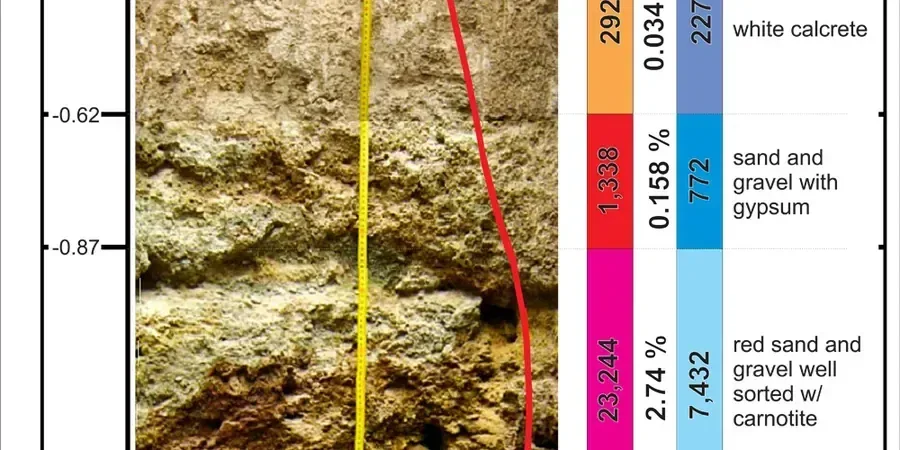
Local geotechnical context
Akron sits at roughly 1,000 feet above sea level on the Glaciated Allegheny Plateau, and the city's 190,000 residents live atop a subsurface that can change character inside a single block. The 1986 magnitude 5.0 earthquake near Painesville was felt throughout Summit County and served as a reminder that Ohio's seismic hazard, while moderate, is not zero; layered silts and loose granular fills can amplify ground motion in ways that only direct observation anticipates. The bigger risk, however, is the quiet one: undocumented backfill from a century of industrial turnover. Exploratory test pits expose old foundations, buried tanks, and organic lenses that become long-term settlement liabilities. Overlooking these features because they sit between widely spaced boreholes has cost Akron developers months of delay and foundation redesigns. A pit excavated in the right location, logged with care, and backfilled under controlled compaction is cheap insurance against the unknown.
Regulatory framework
ASTM D2488 – Standard Practice for Description and Identification of Soils (Visual-Manual Procedure), OSHA 1926 Subpart P – Excavations (trenching and shoring safety), ASTM D698 – Standard Test Methods for Laboratory Compaction Characteristics of Soil Using Standard Effort, ASTM D2487 – Standard Practice for Classification of Soils for Engineering Purposes (Unified Soil Classification System)
Related services
Exploratory Test Pit Excavation and Logging
Mechanically excavated pits to depths up to 12 feet, logged in-situ per ASTM D2488 by an experienced geologist or engineer. Documentation includes stratigraphic columns, photographs, groundwater observations, and bulk sampling. Typical for shallow foundation verification, utility conflict checks, and forensic investigations in downtown Akron's historic industrial lots.
Pit-Bottom In-Situ Testing Package
Combines the test pit with on-site density testing using the sand cone method and field permeability measurements. We can also extract undisturbed block samples for laboratory strength testing. This package is frequently specified for Akron stormwater infiltration basins and retaining wall subdrain verification where saturated hydraulic conductivity must be measured in the natural soil fabric.
Typical parameters
Questions and answers
What depth can an exploratory test pit reach in Akron soils before shoring is required?
Under OSHA 1926 Subpart P, a vertical-sided test pit in Type C soil—common in Akron's silty clays and loose fills—can be excavated to a maximum depth of 12 feet without an engineered protective system, provided no water, vibration, or surcharge loads are present. In practice, we often limit unsupported depth to 8-10 feet because weathered shale near the surface can ravel unpredictably. For deeper investigations, stepping the excavation or using a trench box becomes necessary.
What does an exploratory test pit cost for a residential or small commercial project in Akron?
For a typical Akron residential or light commercial site, an exploratory test pit with standard ASTM D2488 logging, photographs, and a brief report generally falls in the range of US$570 to US$840 per pit, depending on depth, access constraints, and whether laboratory testing of recovered samples is included. Mobilization for the excavator is a separate line item that varies with location and disposal requirements.
How do you handle groundwater in an Akron test pit, and can you measure infiltration rate?
The reference range for this service in Akron is US$570 - US$840. The final price depends on the project scope and volume.