Seismic engineering in Akron, USA, encompasses a comprehensive set of services designed to assess, mitigate, and design for earthquake hazards. This category is critical due to the region's proximity to active seismic zones, including the New Madrid Seismic Zone and the Eastern Tennessee Seismic Zone, which can generate significant ground motion. Akron's infrastructure, from residential buildings to industrial facilities, must be resilient to potential seismic events to ensure public safety and economic continuity. Our services include soil liquefaction analysis, base isolation seismic design, and seismic microzonation, all tailored to local conditions.
Akron's geology is characterized by glacial till, lacustrine deposits, and bedrock formations such as the Sharon Conglomerate and Cuyahoga Shale. These soils can amplify seismic waves or liquefy under shaking, particularly in areas with high water tables or loose granular soils. The presence of old lake beds from the Pleistocene era increases the risk of differential settlement and lateral spreading during an earthquake. Understanding these local geotechnical conditions is essential for accurate hazard assessment and effective mitigation strategies.
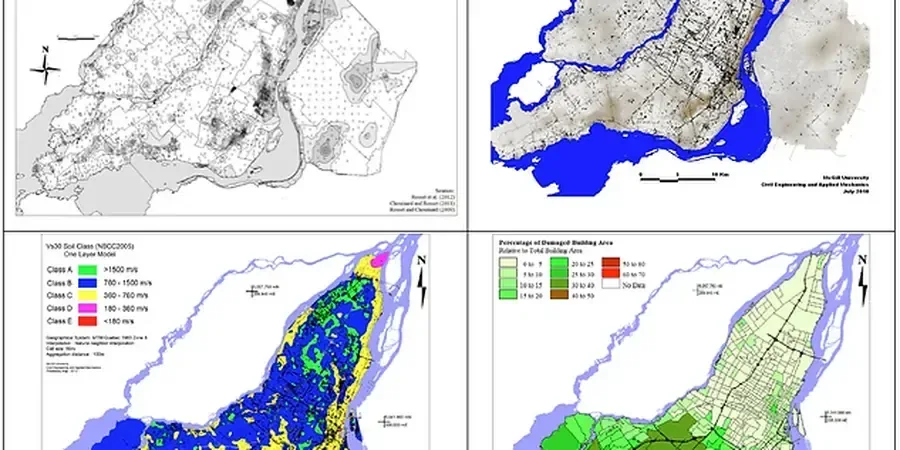
In the United States, seismic design and analysis are governed by the International Building Code (IBC), which references ASCE 7 for minimum design loads. For Akron, the seismic hazard maps from the U.S. Geological Survey (USGS) provide site-specific ground motion parameters. Local regulations may also require compliance with the Ohio Building Code (OBC), which adopts IBC provisions with amendments. These standards mandate that structures in seismic design categories B through F must incorporate appropriate analysis and detailing to withstand earthquake forces.
Projects that require seismic services in Akron include new commercial buildings, bridges, schools, hospitals, and critical infrastructure like water treatment plants and emergency response facilities. Retrofitting of existing structures, especially older masonry or unreinforced buildings, is also common. Industrial facilities handling hazardous materials may need specialized analysis to prevent spills or structural failure. Additionally, residential developments in liquefaction-prone areas often require site-specific studies to ensure foundation stability.
Questions and answers
What is seismic microzonation and why is it important for Akron?
Seismic microzonation is a detailed mapping of local seismic hazards, including ground shaking, liquefaction, and landslide susceptibility. In Akron, it helps identify areas with higher risks due to variable soil conditions, such as glacial deposits or filled ground. This information guides land-use planning and building design to enhance safety and reduce damage during earthquakes.
How does soil liquefaction affect construction in Akron?
Soil liquefaction occurs when saturated, loose soils lose strength during strong shaking, causing ground failure. In Akron, areas with high groundwater tables or sandy soils from glacial deposits are prone to liquefaction. This can lead to foundation settlement, buoyancy of buried structures, and lateral spreading, requiring specialized analysis and mitigation measures.
What are the typical seismic design categories for buildings in Akron?
Seismic design categories (SDC) in Akron range from B to D, depending on site soil class and proximity to seismic sources. Higher categories require more stringent design and detailing, such as ductile framing or base isolation. The USGS hazard maps and site-specific studies determine the exact category for each project, influencing structural systems and foundation design.
Can existing buildings in Akron be retrofitted for seismic resilience?
Yes, existing buildings can be retrofitted using techniques like adding shear walls, steel bracing, or base isolators. In Akron, older unreinforced masonry or concrete structures are particularly vulnerable. A seismic evaluation identifies weaknesses, and targeted upgrades improve performance without full replacement, making it cost-effective for preserving historic or functional buildings.