In-situ testing encompasses a range of field techniques used to evaluate soil and rock properties directly at the project site, without disturbing the sample or removing it for laboratory analysis. In Akron, Ohio, these methods are essential for characterizing subsurface conditions in the glaciated terrain of the Cuyahoga River valley, where variable glacial till, lacustrine deposits, and bedrock shales influence foundation design and earthwork quality. By conducting tests like the Field density test (sand cone method) and Field permeability test (Lefranc/Lugeon), engineers obtain reliable data to guide construction decisions.
The local geology in Akron features a complex sequence of Wisconsinan glacial till, outwash sands and gravels, and lacustrine clays deposited by glacial Lake Maumee. Underlying these is the Bedford Shale and Berea Sandstone of the Mississippian system. This layered stratigraphy often results in variable compaction, permeability, and bearing capacity within short distances, making in-situ testing critical for verifying soil behavior during earthwork compaction and groundwater control measures. The sand cone method is particularly useful for assessing compaction quality in granular fills, while permeability tests help evaluate seepage through the shale bedrock or coarse-grained layers.
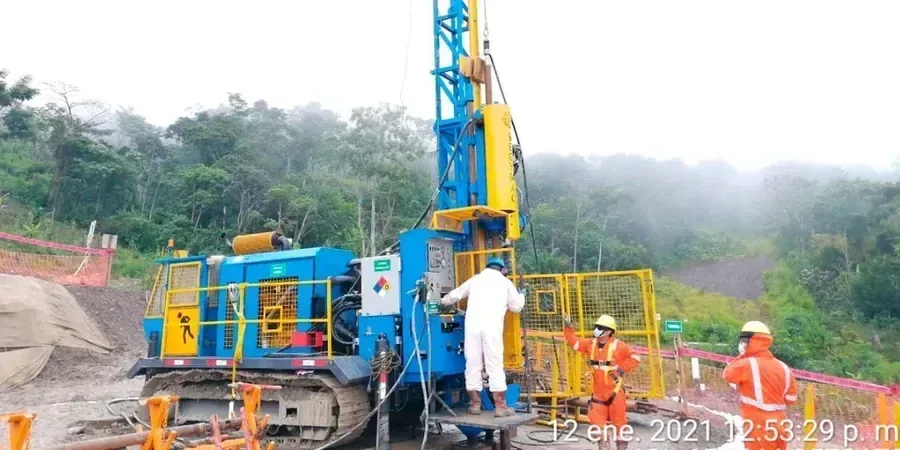
Applicable local and national standards govern in-situ testing practices in Akron. The Ohio Department of Transportation (ODOT) specifies compaction testing protocols in its Construction and Material Specifications (C&MS), including the sand cone method for field density verification per ASTM D1556. For permeability testing, ASTM D6391 (for field measurement of hydraulic conductivity in porous materials) and ASTM D4630 (for Lefranc tests in rock) are commonly referenced. Additionally, the Ohio EPA may require in-situ permeability data for stormwater management design, especially when subsurface infiltration is proposed.
Projects that routinely require in-situ testing in Akron include highway embankments, bridge foundations, retaining walls, and underground utility installations. Residential and commercial developments on fill slopes or near the Cuyahoga River often need compaction verification to prevent settlement or slope instability. Environmental site assessments for brownfield redevelopment in the Akron metropolitan area also rely on field permeability testing to design groundwater remediation systems. Without these tests, construction risks such as differential settlement or uncontrolled groundwater flow increase significantly.
Questions and answers
What is the main advantage of in-situ testing over laboratory testing for Akron projects?
In-situ testing evaluates soil and rock in their natural state or as compacted in the field, preserving stress conditions and moisture content. For Akron's variable glacial till and lacustrine clays, this reduces sampling disturbance and provides immediate, representative data for compaction control and permeability assessment.
How do local regulations in Akron affect the selection of in-situ test methods?
Ohio's construction specifications, such as ODOT C&MS, mandate specific tests like the sand cone method for compaction verification. Local building codes may also require field permeability testing for infiltration systems. Compliance ensures that test results are accepted by regulatory agencies and project owners.
Can in-situ testing be performed in all weather conditions in Akron?
In-situ testing is generally feasible year-round, but extreme cold or heavy rain can affect results. For example, frozen ground interferes with sand cone density tests, while saturated conditions may alter permeability readings. Scheduling during moderate weather and using protective measures helps maintain data quality.
What types of projects in Akron most commonly require field permeability testing?
Field permeability testing is frequently needed for stormwater management facilities, such as infiltration basins and rain gardens, to comply with Ohio EPA regulations. It is also used for groundwater control in deep excavations, landfill liner evaluation, and dewatering design near the Cuyahoga River.